Categories: AIFeaturedTechnology

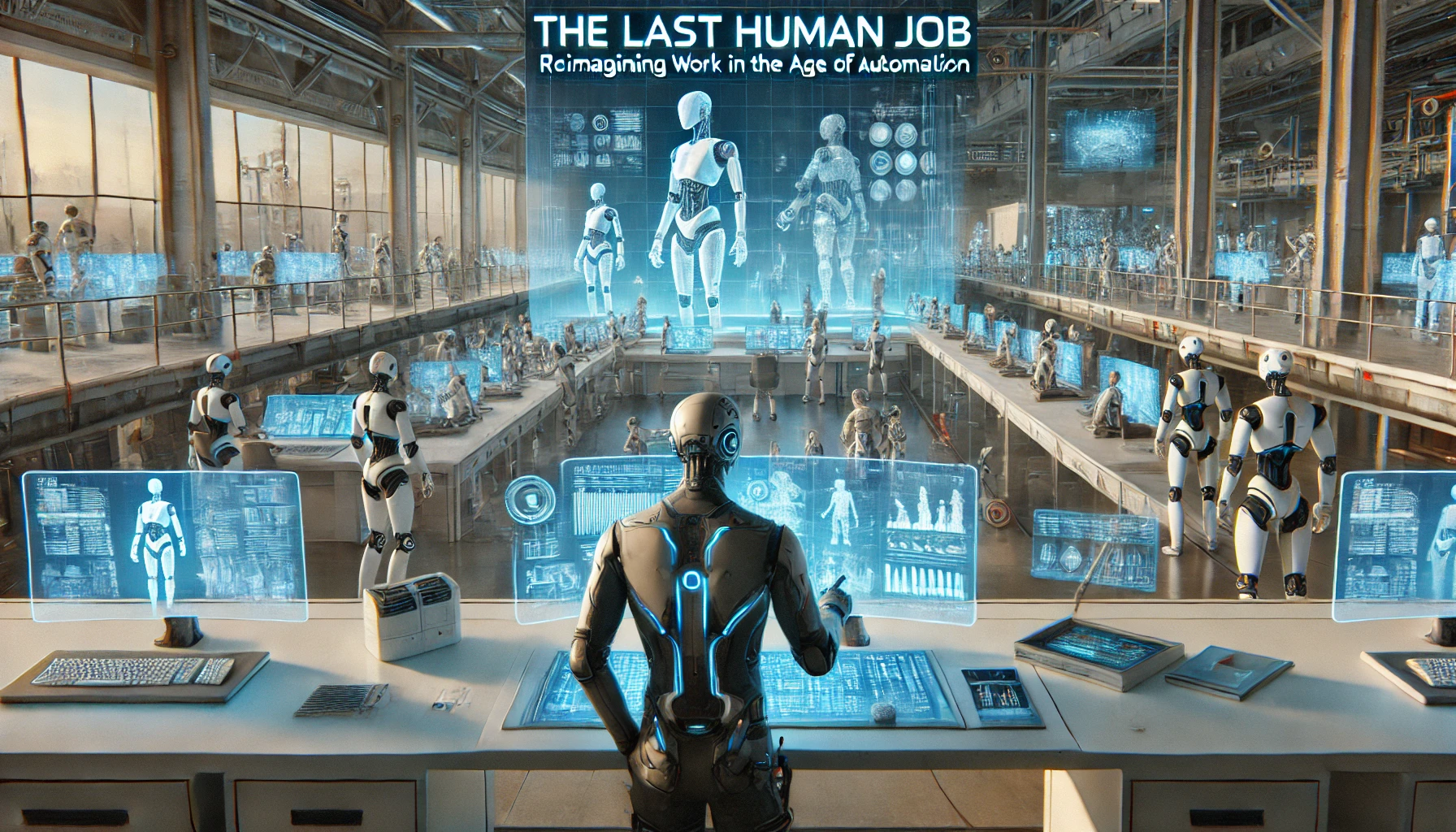
The Last Human Job? Reimagining Work in the Age of Automation

The phrase “the last human job” evokes a dystopian future where machines have rendered human labor obsolete. While this scenario remains firmly in the realm of science fiction, it does raise a crucial question: how will we reimagine work in an age increasingly defined by automation and artificial intelligence?

The relentless march of AI is undeniably transforming the workplace. Tasks once considered the sole domain of humans are now being performed by algorithms and robots with increasing efficiency. From self-checkout kiosks to AI-powered customer service bots, automation is already reshaping industries and prompting anxieties about the future of human employment.

Beyond the Fear: A New Definition of Work?

Instead of succumbing to the fear of a jobless future, perhaps it’s time to fundamentally rethink our concept of “work.” For centuries, work has been largely synonymous with survival, a means to an end – earning a living to meet basic needs. But what if automation liberates us from this constraint? What if, instead of “the last human job,” we strive to create a future where work is less about necessity and more about purpose, creativity, and human flourishing?

The Shifting Landscape: What Will Humans Do?

While the complete elimination of human labor seems unlikely, the nature of work will undoubtedly undergo a radical transformation. Here are some potential shifts:

  • From Repetition to Creativity: Automation will likely handle repetitive, manual, and data-heavy tasks, freeing up human workers to focus on tasks that require creativity, innovation, and ingenuity. This could lead to a resurgence in fields like the arts, design, and scientific research.
  • From Execution to Oversight: As AI systems become more prevalent, humans will increasingly play a role in managing, monitoring, and optimizing these systems. This will require a new set of skills, including data analysis, AI ethics, and system troubleshooting. You can become an AI manager in the future.
  • The Rise of the “Care Economy”: Jobs that involve empathy, emotional intelligence, and human connection, such as caregiving, social work, and counseling, are likely to remain in high demand. These roles are difficult to automate and are essential to a well-functioning society.
  • The Emergence of New Industries: Just as the internet revolution gave rise to entirely new industries and professions, the AI revolution will likely do the same. It’s difficult to predict precisely what these new industries will be, but they will likely involve areas like human-AI collaboration, AI training, and the development of ethical frameworks for AI.

Reimagining Work: A Collective Responsibility

This transition will require a collective effort from individuals, businesses, and governments:

  • Education Reform: Our education systems need to adapt to the changing demands of the labor market, prioritizing skills like critical thinking, creativity, and problem-solving, alongside STEM education.
  • Lifelong Learning: The ability to learn and adapt throughout one’s career will be crucial. Individuals must embrace a mindset of continuous learning and upskilling.
  • Social Safety Nets: As the nature of work evolves, we may need to explore new models of social security, such as universal basic income, to ensure that everyone has a basic standard of living.
  • Ethical Considerations: We must engage in a thoughtful and ongoing conversation about the ethical implications of automation, ensuring that AI is developed and deployed responsibly.

The Future is Human

The “last human job” may be a provocative thought experiment, but it’s ultimately a misleading one. The future of work in the age of automation is not about the absence of human labor, but about its redefinition. It’s about shifting from a focus on tasks that can be automated to those that require uniquely human qualities: empathy, creativity, critical thinking, and collaboration. By embracing this transformation and investing in human potential, we can create a future where work is not just a means to an end, but a source of purpose, fulfillment, and shared prosperity. The future, even in an automated world, remains fundamentally human.

Follow me
Top 10 Shopify Apps for eCommerce Stores in 2025
Ultimate Guide to How Encoders Work: Types & Applications
Debarup Mukherjee

Hi friends, This is Debarup Mukherjee, a Digital Marketing Specialist, SEO Consultant & Blogger. I have over 12 years experience in Digital Marketing. I love to write on technology and SEO. I have built many blogs, one of them is Techno World News, specially for Technology & Internet. Hope everyone like and enjoy this blog and get valuable information which you can share with your friends. You can ask me anything on my Twitter, Facebook or Google+ Account

Share
Published by
Debarup Mukherjee

Recent Posts

Top 10 Web Development Companies in Kolkata

Are you searching for a trustworthy web development company in Kolkata? The good news is…

5 months ago

How Modern Website Design Impacts Your Sales and Conversions

When someone lands on your website, you’ve got just a few seconds, sometimes less than…

5 months ago

Top 10 Shopify Apps for eCommerce Stores in 2025

What do Tesla and Nestlé have in common?  Well, besides being titans in their respective…

5 months ago

How to Choose the Right GoHighLevel Developer for Your Business

As more businesses embrace GoHighLevel (GHL) to streamline sales, marketing, and automation, the demand for…

8 months ago

7 Key Web Design Principles To Create Impactful Web Experiences

The first instance of a website dates back to November 1992, just a year after…

2 years ago

Why Your Small Business Needs SEO To Succeed

In today’s digital landscape, having a strong online presence is essential for any business. This…
2 years ago